
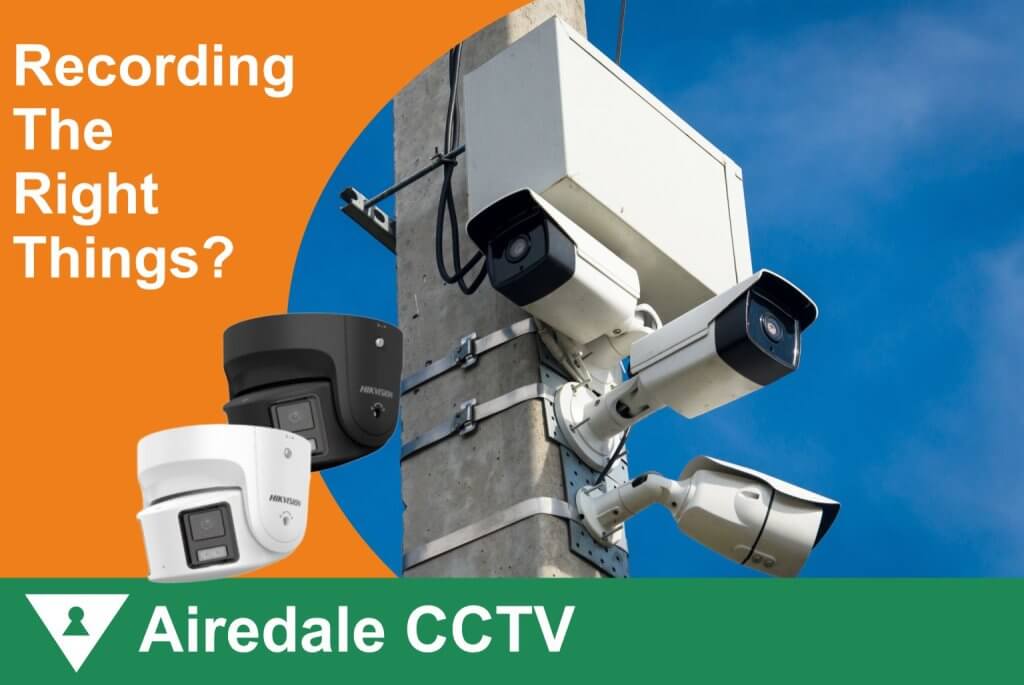
Recording the Right Things – When businesses decide to upgrade their CCTV system, one of the first questions is often, “How many cameras do we need?” Whilst the number of cameras is certainly important, it is rarely the deciding factor in how effective a surveillance system will be.
A well-designed commercial CCTV installation is built around what needs to be recorded, not simply how many cameras can be installed. Two carefully positioned cameras can sometimes provide more useful evidence than six cameras that have been placed without considering how the premises actually operate.
Businesses throughout Airedale and Keighley are continually adapting their sites. Warehouses are reconfigured, offices expand, machinery is relocated and customer areas evolve. Every operational change affects how people, vehicles and goods move around the premises. If camera positioning does not evolve at the same pace, valuable footage may never be captured when it is needed most.
A common mistake is concentrating cameras on building entrances while overlooking what happens after somebody enters the premises. Recording a person walking through a doorway is useful, but understanding where they went afterwards, which areas they accessed and how they moved around the site often proves far more valuable during an investigation.
Vehicle movements deserve the same level of planning. Many commercial premises have excellent coverage of the entrance gate but limited visibility of loading bays, turning areas or staff parking facilities. These are often the locations where incidents, damage or disputes actually occur.
Production facilities introduce another challenge. Manufacturing layouts change regularly as businesses invest in new equipment or improve workflows. Machinery can obstruct camera views, while temporary storage areas sometimes become permanent fixtures. Without periodic reviews, cameras may continue recording areas that are no longer operationally important whilst missing locations where daily activity now takes place.
Retail businesses also benefit from strategic positioning rather than simply increasing camera numbers. Monitoring customer entrances remains important, but equally valuable are cameras overlooking self-service areas, high-value displays, stock transfer routes and cash handling procedures. These locations often provide more useful operational information than broad overview shots.
Office environments have changed significantly with hybrid working. Reception areas, collaboration spaces and shared facilities now experience different usage patterns throughout the week. Camera placement should reflect these changes rather than relying on assumptions made several years ago.
The height of a camera also has a significant influence on image quality. Cameras mounted excessively high may provide impressive wide-angle views but struggle to capture facial detail when recordings are reviewed. Conversely, cameras installed too low may be vulnerable to accidental damage or deliberate interference. Professional design balances these considerations to achieve practical, usable footage.
Lighting conditions are another factor frequently underestimated. Bright reception windows, warehouse roller shutters and external floodlighting can all affect image quality if camera angles are not carefully considered. Modern commercial CCTV systems are designed to cope with varying light levels, but positioning remains critical.
One advantage of contemporary IP CCTV systems is their flexibility. Additional cameras can usually be incorporated without replacing the entire installation, allowing businesses to respond to changing operational requirements whilst protecting their original investment.
Routine CCTV reviews should therefore form part of wider facilities management. Walking the premises whilst observing live camera views often reveals opportunities to improve coverage simply by making small adjustments to existing equipment.
Ultimately, commercial CCTV is not about achieving the highest camera count. It is about ensuring that every camera has a clear purpose and records information that genuinely supports the business. Whether that involves protecting assets, improving operational oversight or providing evidence following an incident, thoughtful positioning will always deliver greater value than simply adding more cameras.
For businesses across Airedale and Keighley, reviewing where cameras are looking—not just how many there are—can significantly improve the effectiveness of an existing CCTV system while ensuring it continues to reflect how the premises operate today.